
Coastal Hurricane Preparedness: Wind Uplift & Water Barriers

Understanding the physics of hurricane wind uplift (ASTM D3161 Class F & ASTM D7158 Class H) and how peel-and-stick underlayments protect homes when shingles blow away. When dealing with hurricane proof roofing texas, timely execution according to Texas building standards prevents costly secondary water damage to interior drywall, insulation, and roof decking.
Engineering Roofs for Category 3 to 5 Hurricane Winds
During a hurricane, winds rushing over the peak of your roof accelerate, creating intense negative pressure (uplift) that tries to suck the roof deck upward off your home's rafters.
The 2-Tier Hurricane Defense:
- Class H Wind Uplift Shingles (150 MPH): We install shingles tested under ASTM D7158 Class H with continuous self-sealing adhesive strips and 6 ring-shank nails driven through the reinforced nailing zone.
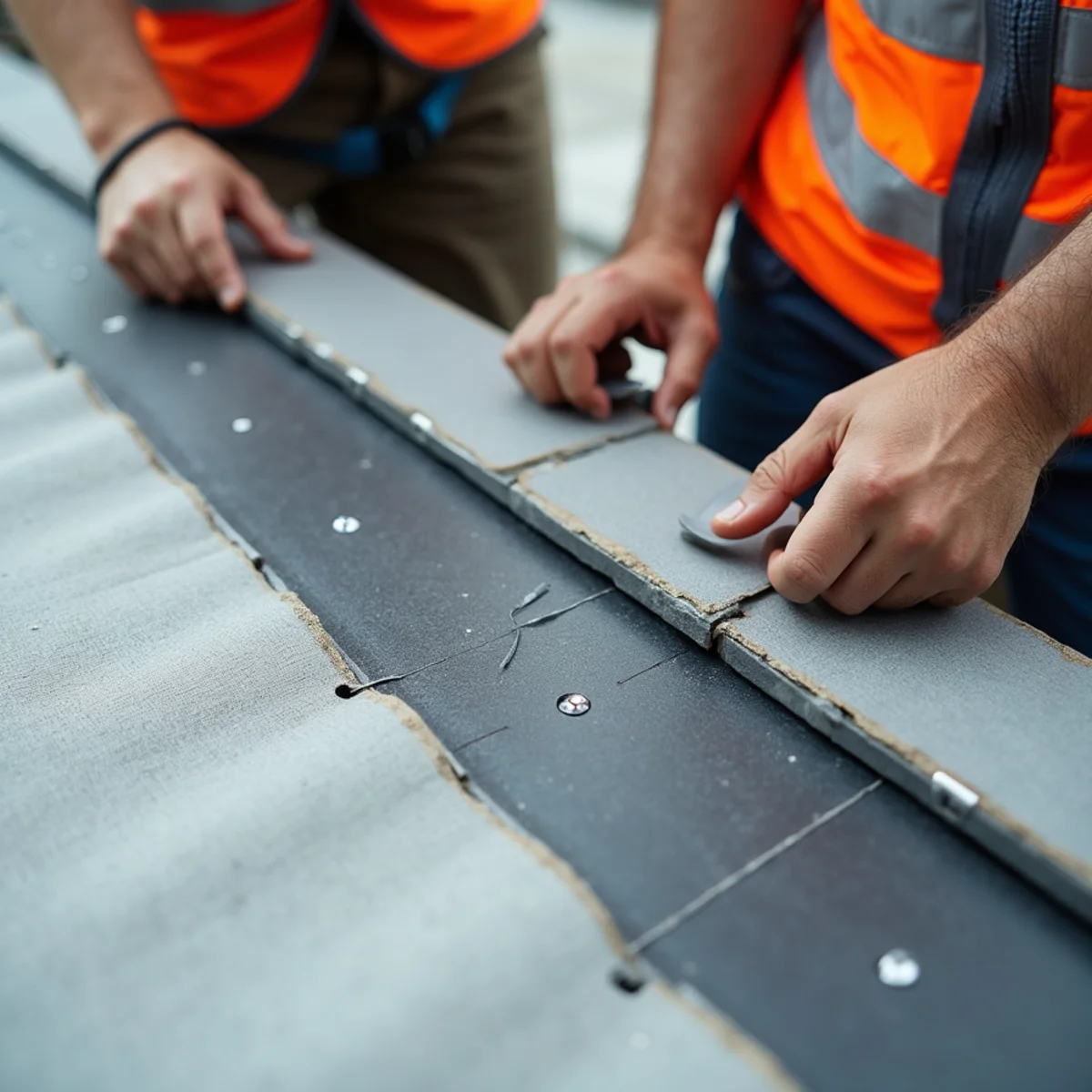
- Self-Adhering Secondary Water Barrier (SWR): If a Category 4 gust shears off shingles, traditional felt paper rips off with them. We apply a self-adhering polymer-modified asphalt membrane directly to the bare plywood decking. Even if every shingle blows off, this secondary water barrier seals watertight around nail penetrations, keeping your interior 100% dry.
Technical Engineering Analysis & Local Building Code Standards
Implementing roofing solutions in Greater Houston requires addressing the unique convergence of high ambient humidity, intense solar ultraviolet exposure, and sudden tropical convective storm squalls. Under the International Residential Code (IRC Chapter 9 for Roof Assemblies) and local municipal amendments across Harris, Fort Bend, and Montgomery counties, roofing systems must satisfy strict performance criteria:
1. Underlayment & Water-Resistive Barriers (IRC R905.1.1)
Standard asphalt-saturated organic felt (No. 15 or No. 30) degrades quickly in Houston's humid climate, trapping heat and deteriorating when exposed to moisture. We specify tear-resistant synthetic underlayment engineered from woven polypropylene. In critical water-shedding areas—including roof valleys, eaves, and around chimney curbs—we install self-adhering polymer-modified bitumen ice-and-water membranes that seal tightly around nail penetrations.
2. High-Wind Fastening Patterns (ASTM D3161 / D7158)
While standard building code permits 4 nails per shingle in low-wind interior regions, Houston's proximity to the Gulf Coast places it in a designated high-wind zone. Every architectural shingle installed by PRIME REPAIR SERVICES L&R LLC is secured with a 6-nail fastening schedule driven through the manufacturer's reinforced nail zone into sound 7/16-inch OSB or 1/2-inch plywood decking. This increases the shingle's wind uplift resistance from 110 MPH to 130 MPH, providing vital protection during tropical storms and hurricanes.
3. Flashing Transitions & Moisture Containment
Over 80% of persistent residential roof leaks occur at vertical wall and roof plane intersections. We fabricate and install heavy-duty 26-gauge galvanized or aluminum step flashing, continuous counter-flashing with recessed reglet mortar joints, and custom kick-out flashing diverters that channel water safely away from exterior wall assemblies into seamless gutters.
Long-Term Preventative Value
Taking proactive steps to inspect and maintain these critical roofing junctions prevents silent moisture ingress, preserves attic insulation R-value, and protects the structural framing of your property for decades to come.
Gulf Coast Environmental Hazard & Structural Defense Matrix
Technical benchmarks and practical guidelines for Greater Houston properties.
| Environmental Hazard | Local Climate Mechanism | Structural Impact on Roof | Engineering Countermeasure | Standard Compliance |
|---|---|---|---|---|
| Expansive Black Gumbo Clay Soil | Soil shrinks during summer droughts and swells drastically during winter rains. | Foundation shifts cause differential settlement, racking roof trusses and tearing valley seams. | Flexible self-adhering modified bitumen valley membranes; reinforced slip-joint flashing. | IRC Section R905.2.8.2 Valley Lining |
| Tropical Gale Wind Uplift | Gulf hurricane squalls produce negative pressure vortices along eaves and roof ridges. | Pulls shingle tabs upward, unsealing thermal adhesive strips and snapping fasteners. | 6-nail ring-shank fastening pattern; enhanced mechanical starter strips on rakes and eaves. | ASTM D3161 Class F (130 MPH Rating) |
| Extreme UV & Thermal Shock | Intense summer solar radiation drives surface roof temps above 175°F followed by sudden rain cool-down. | Rapid thermal contraction causes granule loss, micro-fissures in asphalt, and adhesive breakdown. | SBS-polymer modified asphalt shingles; high-reflectivity cool granules; continuous ridge exhaust. | CRRC (Cool Roof Rating Council) Specs |
| Commercial Flat Roof Ponding | Torrential rain leaves standing water on low-slope commercial roofs with inadequate scuppers. | Accelerates membrane degradation, adds dead load weight, causes seam delamination. | Tapered ISO insulation boards; fluid-applied high-solids silicone monolithic coatings. | ASTM D6694 Liquid Silicone Standard |
How Houston's Black Gumbo Clay Foundation Movement Pulls Roof Flashings Apart
Greater Houston sits atop deep layers of Beaumont Formation clay, colloquially known as 'Houston Black Gumbo.' This soil exhibits extreme shrink-swell plasticity, expanding dramatically when saturated and developing deep fissures during summer heatwaves. As a result, residential concrete slab-on-grade foundations continuously shift, heave, and settle over time.
While homeowners typically look for foundation issues in cracked drywall or sticking doors, structural settlement exerts massive torsional stress on roof trusses and framing. As one corner of the foundation drops even half an inch, the rigid wooden framing of the roof racks out of square. This movement directly pulls flashing away from brick chimneys, cracks counter-flashing mortar joints, and tears valley underlayment seams apart.
At PRIME REPAIR SERVICES L&R LLC, our roofing replacement protocol accounts for local structural movement. We install oversized step flashing with generous mechanical overlap, double-layer self-healing ice-and-water membranes across all roof valleys, and flexible elastomeric polyurethane sealants rated for +/- 50% joint movement rather than rigid caulks that snap under building settlement.
Frequently Asked Questions: Coastal Hurricane Preparedness: Wind Uplift Ratings and Secondary Water Barriers
Authoritative answers backed by Texas building standards and local field experience.
Yes. When Houston's expansive clay soil causes foundation movement, the roof framing shifts, separating metal flashing around chimneys, dormers, and sidewalls. Water then enters through torn flashing seams even if the shingles themselves remain undamaged.
In Harris County and surrounding inland areas, roofs must be installed to withstand 115 to 120 MPH wind gusts under the International Residential Code. In coastal Tier 1 windstorm zones (like Galveston and coastal Harris County), TWIA codes mandate 130 to 140 MPH wind resistance, requiring 6-nail fastening patterns and specific windstorm-rated starter shingles.
Water that ponds on a flat roof for longer than 48 hours adds dangerous dead-weight structural load, magnifies UV radiation like a lens, accelerates asphalt seam deterioration, and voids most manufacturer warranties. Applying a monolithic silicone roof coating permanently eliminates ponding water leaks.
Maritime salt air corrodes standard galvanized steel fasteners and edges. For coastal and near-bay properties, we install 24-gauge Galvalume or aluminum standing seam metal panels coated with fluoropolymer Kynar 500 finishes to resist salt corrosion and chalking.
Engineered Roofing Built for Houston's Unique Geology and Climate
Standard roofing techniques designed for dry or temperate climates fail prematurely in Southeast Texas. Building a durable roof in Houston requires addressing the trifecta of expansive clay soils, extreme atmospheric moisture, and hurricane-force wind uplift through engineered construction details.
Choose PRIME REPAIR SERVICES L&R LLC for roofing systems specifically engineered to withstand Houston conditions. Call (855) 705-1940 today for a complimentary inspection.
Related Services & Greater Houston Service Hubs
Need Professional Advice on Your Houston Roof?
Our experienced roofing specialists provide free on-site inspections, photo documentation, and honest written recommendations across Harris, Fort Bend, and Montgomery counties.