
How to Spot Hail Bruises and Wind Creases on Houston Shingles
Hail damage rarely punches visible holes right away. Learn how to inspect test squares, identify crushed fiberglass mats, and detect subtle wind crease lines. When dealing with spot hail damage roof houston, timely execution according to Texas building standards prevents costly secondary water damage to interior drywall, insulation, and roof decking.
Identifying Covert Storm Damage on Houston Shingles
When severe thunderstorms pass over Greater Houston, severe hail and high straight-line winds leave telltale signatures on asphalt shingle roofs. While catastrophic damage like missing shingles or shattered skylights is obvious from the street, over 80% of storm damage is covert: microscopic fractures, granular displacement, and creased shingle tabs that leak weeks or months later.
1. The Anatomy of a Hail Bruise
When a hailstone strikes an asphalt shingle at terminal velocity:
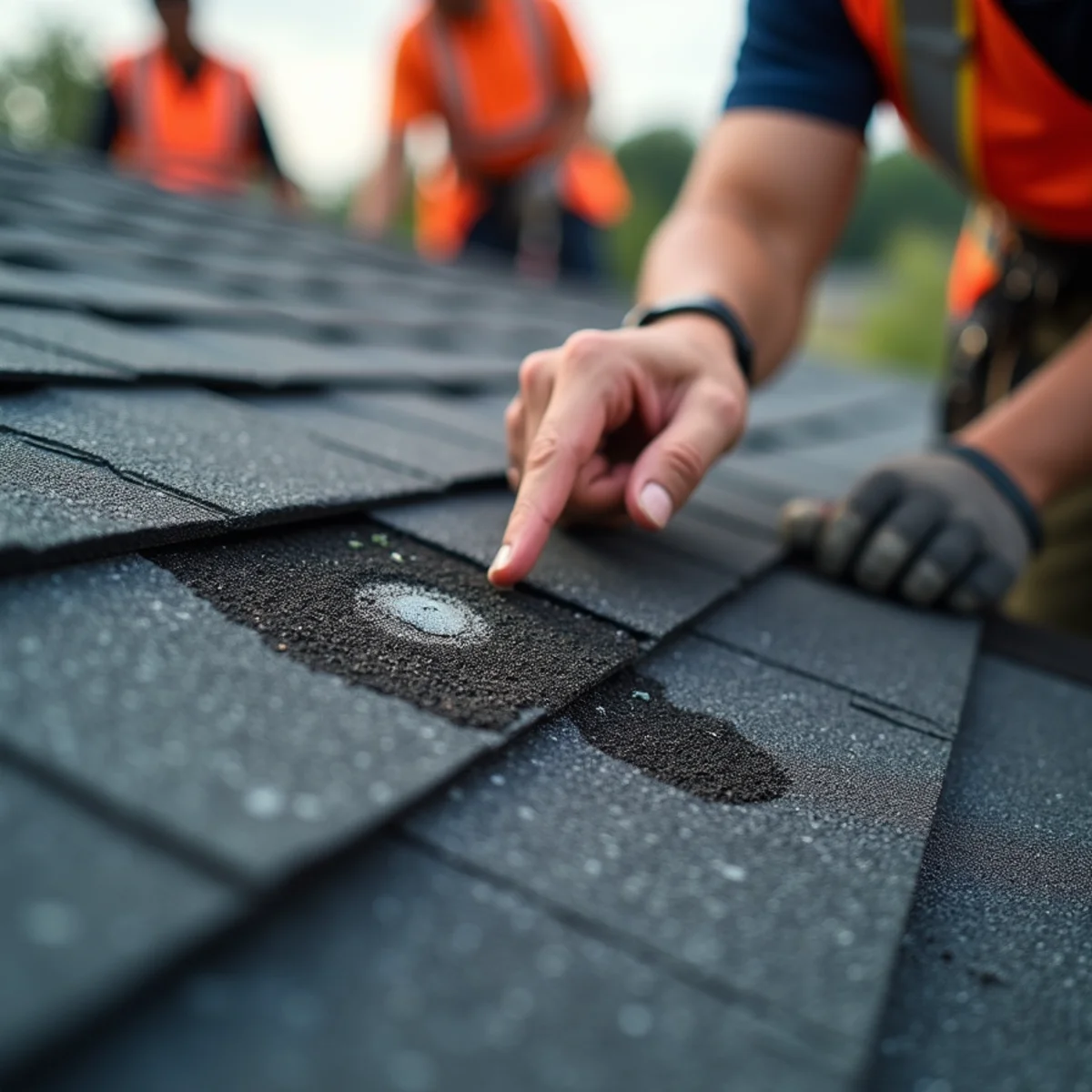
- Granule Loss: The ceramic granules embedded in the top asphalt coating are crushed and dislodged, exposing the dark black asphalt layer beneath.
- Micro-Fractures: Beneath the surface, the fiberglass reinforcement mat fractures. This soft spot—felt by pressing lightly with a thumb—is called a 'bruise.'
- Accelerated UV Decay: Once granules are gone, Houston's intense summer UV rays break down the raw asphalt within months, allowing rain to seep through into the roof decking.
2. Wind Creasing & Seal Failure
During high-wind events (50 to 80+ MPH gusts):
- Wind catches the bottom edge of shingles, breaking the manufacturer's thermal adhesive sealant strip.
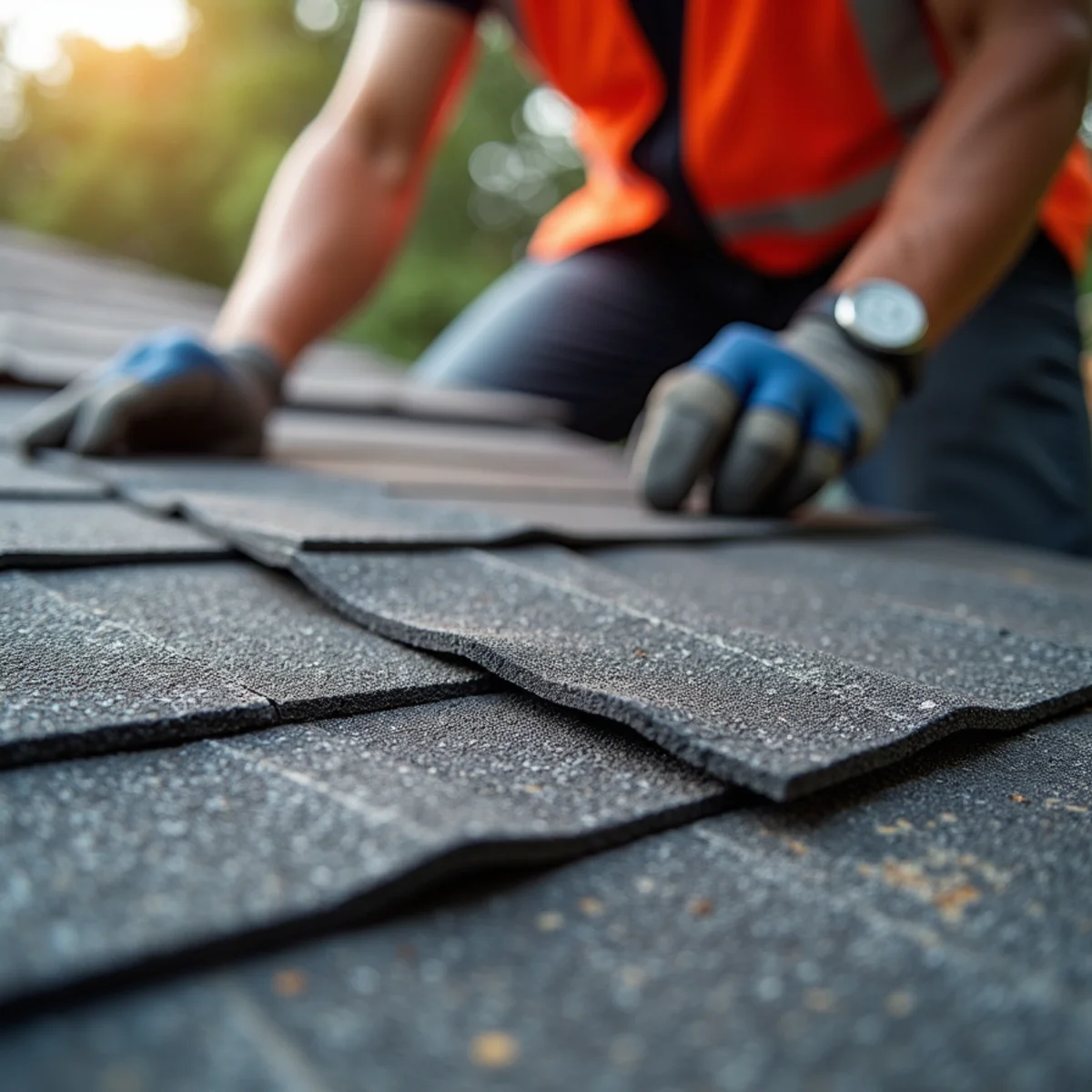
- As the shingle flaps upward, it bends sharply along its upper fastening line, creating a horizontal crease.
- Even if the shingle settles back flat, the crease has cracked the asphalt backing. On the next heavy rain, water will blow underneath the unsealed tab.
3. Collateral Damage Indicators (Ground-Level Inspection)
Homeowners can spot signs of storm damage without climbing a ladder:
- Dents on Soft Metals: Check aluminum downspouts, gutter rims, and outdoor AC condenser fins for rounded hail indentations.
- Granule Accumulation: Check gutter discharge points for heavy piles of mineral granules washing out after the storm.
- Window Screen Splatters: Hail stones leave clean circular impact marks on oxidized window screens and painted siding.
Insurance Adjuster Test Squares
When insurance adjusters inspect your roof, they chalk off a 10-foot by 10-foot 'test square' on each roof slope. If they find 8 to 10 verified hail bruises within that 100-square-foot area, the entire slope qualifies for full replacement under standard underwriting guidelines.
Emergency Roof Leak Severity & Action Window Matrix
Technical benchmarks and practical guidelines for Greater Houston properties.
| Leak Scenario | Immediate Action Window | Homeowner Containment | Professional Crew Repair | Policy Reimbursability |
|---|---|---|---|---|
| Drywall Blister / Ceiling Bulge | Under 30 Minutes | Puncture center of blister with screwdriver into catch bucket; move furniture. | Moisture mapping, attic decking inspection, emergency 2x4 batten tarping. | 100% covered under 'Reasonable Emergency Mitigation' provisions. |
| Active Shingle Blow-Off (Severe Gale) | Same-Day Storm Window | Remain indoors; photograph ceiling & ground debris from safe room. | Industrial 10-mil poly tarp battened over ridge cap with exterior screws. | Covered under primary storm damage wind peril (Subject to deductible). |
| Chimney / Vent Pipe Flashing Breach | Within 2 to 4 Hours | Place catch pans in attic if safely accessible; run dehumidifier. | Remove deteriorated lead/rubber boot; install custom seamless counter-flashing. | Component repair covered if caused by wind uplift or tree impact. |
| Tree Limb Puncture on Decking | Immediate 24/7 Dispatch | Evacuate room beneath impact zone; shut off local electrical breakers. | Structural rafter bracing, OSB/plywood redecking, water barrier seal. | Covered under structural collision damage with tree removal allowance. |
Why Hidden Water Pathways Cause Severe Mold Within 48 Hours in Houston
When rainwater breaches an asphalt shingle roof during a Gulf storm, water rarely drips straight down into the living area below the entry point. Instead, water follows the path of least resistance: running horizontally along synthetic underlayment, traversing rafters, pooling across ceiling joists, and eventually emerging through a drywall screw hole or light fixture 15 feet away from the initial roof puncture.
In Houston's subtropical climate—where indoor relative humidity frequently exceeds 70% following storm-related power outages—saturated cellulose insulation and paper-faced gypsum drywall become prime incubation environments for Aspergillus and Stachybotrys chartarum mold spores within 24 to 48 hours. Relying solely on a catch bucket without professional moisture mapping and attic ventilation checks leaves moisture trapped inside structural cavities, leading to silent framing dry rot and costly remediation down the road.
At PRIME REPAIR SERVICES L&R LLC, our emergency teams utilize calibrated FLIR infrared thermal imaging cameras and non-destructive pinless moisture meters during every storm call. This allows us to trace water intrusion backwards to its exact entry point on the roof plane, ensuring complete mechanical sealing rather than superficial patch jobs.
Frequently Asked Questions: How to Spot Hail Bruises and Wind Creases on Houston Shingles After Severe Weather
Authoritative answers backed by Texas building standards and local field experience.
Professional emergency roof tarping in Houston typically ranges from $350 to $1,200 depending on roof pitch, square footage, and accessibility. Under Texas homeowners insurance policies, reasonable and necessary emergency tarping to prevent secondary water damage is 100% reimbursable under your policy's 'Duties After Loss' mitigation clause.
No, never climb onto a wet roof during or immediately after a storm. Wet asphalt shingles and synthetic underlayment become frictionless slip hazards, strong winds can knock you off ladders, and damaged roof decking may collapse under your weight. Contain leaks indoors and call our licensed 24/7 dispatch crews at (855) 705-1940.
A professionally battened heavy-duty tarp secured with 2x4 lumber can protect a roof for up to 90 days. However, you should schedule permanent shingle replacement or deck repair as quickly as possible, as Texas summer UV rays and heat will eventually degrade poly tarp fibers.
Capture clear, date-stamped photos and videos of water dripping, bulging ceiling drywall, damaged interior furnishings, and any fallen branches or shingles visible from the ground. Keep your receipts for buckets, towels, or moisture absorbers, as these are reimbursable mitigation expenses.
Immediate Action Protects Your Home's Value and Structural Framing
Experiencing an active roof leak during severe weather is stressful, but methodical execution saves thousands of dollars in secondary structural damage. Puncturing the ceiling bulge to relieve hydrostatic pressure, protecting floor surfaces, and securing immediate professional mechanical tarping are the three critical moves every Houston homeowner must make.
PRIME REPAIR SERVICES L&R LLC provides around-the-clock emergency dispatch across Harris, Fort Bend, and Montgomery counties. Call our direct dispatch line at (855) 705-1940 immediately to dispatch a certified roofing crew to secure your home.
Related Services & Greater Houston Service Hubs
Need Professional Advice on Your Houston Roof?
Our experienced roofing specialists provide free on-site inspections, photo documentation, and honest written recommendations across Harris, Fort Bend, and Montgomery counties.