
Oversized Seamless Gutters: Protecting Foundations from Houston Downpours

Houston's expansive black gumbo clay soil heaves and cracks when saturated unevenly. Discover why 6-inch seamless gutters are essential foundation defense. When dealing with seamless gutters houston, timely execution according to Texas building standards prevents costly secondary water damage to interior drywall, insulation, and roof decking.
The Link Between Roof Drainage and Foundation Failure
In Harris and Fort Bend Counties, residential foundations sit on highly expansive 'black gumbo' clay. When dry, this clay shrinks and pulls away from concrete slabs; when wet, it swells with immense hydraulic pressure.
When roof rain cascades off eaves in uncontrolled torrents:
- Water trenches pool against foundation footings.
- Soil under that side of the house expands, causing differential foundation upheaval.
- Interior sheetrock cracks, tile buckles, and doors stick in doorframes.
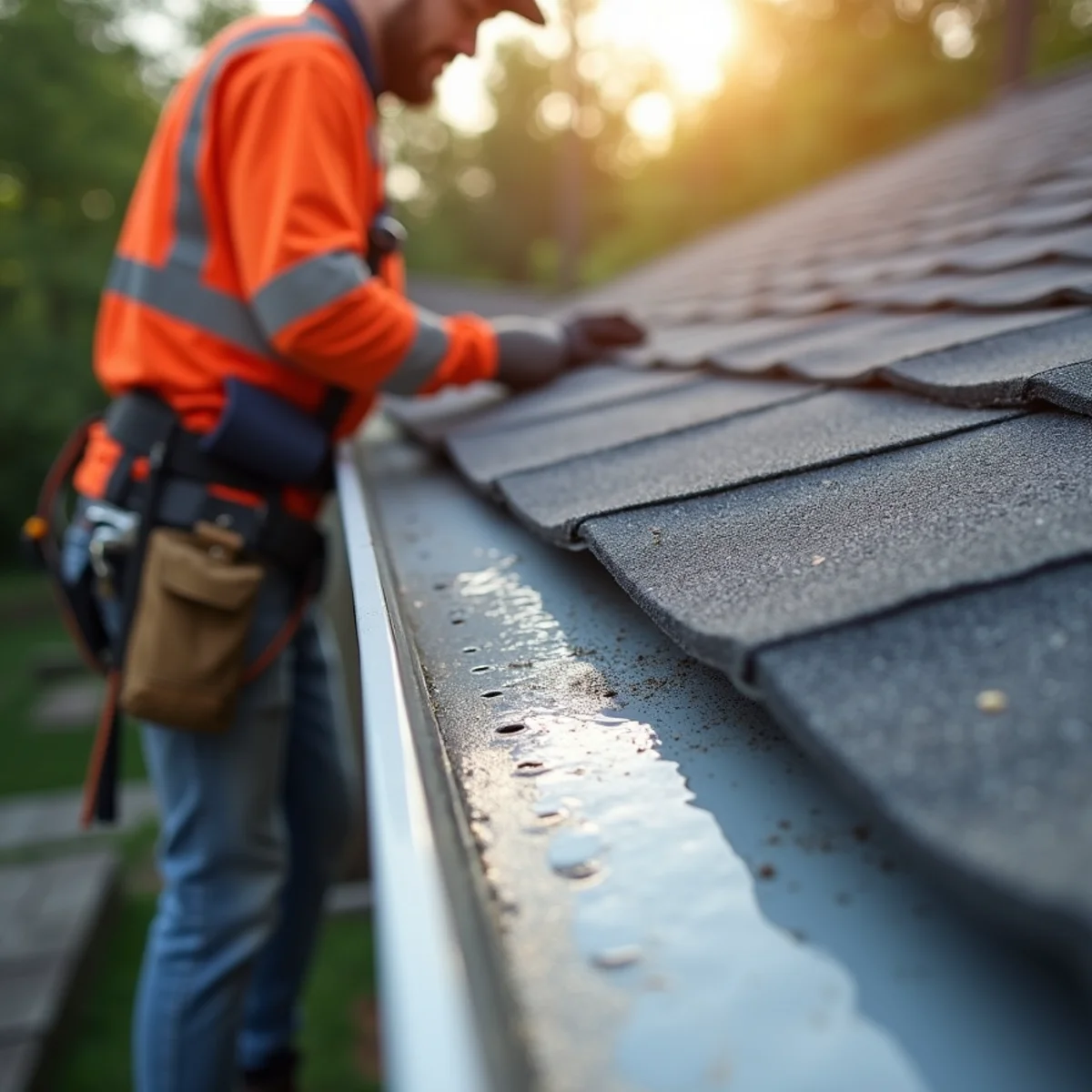
Why Standard 5-Inch Gutters Overflow
Standard 5-inch sectional gutters hold 40% less water volume than 6-inch seamless aluminum gutters. During a typical Houston 3-inch-per-hour cloudburst, 5-inch gutters instantly overflow, spilling water behind the fascia board and directly against the slab.
PRIME REPAIR SERVICES L&R LLC extrudes custom heavy-gauge 6-inch seamless gutters on site with 3x4-inch commercial downspouts, routing thousands of gallons of rainwater safely away from your home.
Technical Engineering Analysis & Local Building Code Standards
Implementing roofing solutions in Greater Houston requires addressing the unique convergence of high ambient humidity, intense solar ultraviolet exposure, and sudden tropical convective storm squalls. Under the International Residential Code (IRC Chapter 9 for Roof Assemblies) and local municipal amendments across Harris, Fort Bend, and Montgomery counties, roofing systems must satisfy strict performance criteria:
1. Underlayment & Water-Resistive Barriers (IRC R905.1.1)
Standard asphalt-saturated organic felt (No. 15 or No. 30) degrades quickly in Houston's humid climate, trapping heat and deteriorating when exposed to moisture. We specify tear-resistant synthetic underlayment engineered from woven polypropylene. In critical water-shedding areas—including roof valleys, eaves, and around chimney curbs—we install self-adhering polymer-modified bitumen ice-and-water membranes that seal tightly around nail penetrations.
2. High-Wind Fastening Patterns (ASTM D3161 / D7158)
While standard building code permits 4 nails per shingle in low-wind interior regions, Houston's proximity to the Gulf Coast places it in a designated high-wind zone. Every architectural shingle installed by PRIME REPAIR SERVICES L&R LLC is secured with a 6-nail fastening schedule driven through the manufacturer's reinforced nail zone into sound 7/16-inch OSB or 1/2-inch plywood decking. This increases the shingle's wind uplift resistance from 110 MPH to 130 MPH, providing vital protection during tropical storms and hurricanes.
3. Flashing Transitions & Moisture Containment
Over 80% of persistent residential roof leaks occur at vertical wall and roof plane intersections. We fabricate and install heavy-duty 26-gauge galvanized or aluminum step flashing, continuous counter-flashing with recessed reglet mortar joints, and custom kick-out flashing diverters that channel water safely away from exterior wall assemblies into seamless gutters.
Long-Term Preventative Value
Taking proactive steps to inspect and maintain these critical roofing junctions prevents silent moisture ingress, preserves attic insulation R-value, and protects the structural framing of your property for decades to come.
Common Houston Roof Vulnerability Breakdown & Repair Thresholds
Technical benchmarks and practical guidelines for Greater Houston properties.
| Component / Assembly | Typical Failure Mechanism | Primary Warning Sign | Repair Protocol | Replacement Trigger |
|---|---|---|---|---|
| Pipe Boot Penetration Collars | Neoprene rubber dry-rots and cracks from 100°F+ UV solarization. | Circular yellow water stain on ceiling directly below bathroom or kitchen vent. | Install silicone high-temp collar or replace with heavy-duty lead boot assembly. | Widespread decking rot around multiple pipe penetrations. |
| Chimney Step & Counter-Flashing | Mortar joint caulking separates; rusted galvanized steel step flashing. | Water running down fireplace brickwork or stains on attic rafters near chimney. | Cut new reglet groove into masonry, install interlocking copper/aluminum counter-flashing. | Structural decay of chimney chase framing or rotted cricket saddle. |
| Continuous Ridge Ventilation | Clogged external baffles, unsealed end caps, or inadequate soffit intake air. | Attic temperatures reaching 150°F+; premature shingle granule shedding and blistering. | Clean intake soffit vents; install baffled high-flow external ridge vent. | Heat-baked shingles brittle across entire southern and western roof exposures. |
| Seamless Gutter & Downspout System | Undersized 5-inch gutters overflow during 3-inch/hour tropical convective downpours. | Water cascading over gutters, digging trenches near foundation, rotted fascia boards. | Re-pitch gutters with heavy-duty hidden screw hangers at 24-inch intervals. | Upgrade to 6-inch seamless aluminum K-style gutters with 3x4 oversized downspouts. |
The 1:300 Attic Ventilation Rule & How Gulf Heat Destroys Under-Ventilated Roofs
In the International Residential Code (IRC Section R806), the building code dictates a minimum net free ventilating area (NFVA) ratio of 1:300 for enclosed attics. For every 300 square feet of attic floor space, at least 1 square foot of balanced ventilation is required—split equally 50% at the lower eaves (soffit intake) and 50% at the upper ridge (exhaust).
In Houston, when attics lack adequate soffit intake or have clogged vents, solar radiation turns the attic into a 150°F to 160°F thermal convection oven during July and August. This extreme heat bakes the asphalt binder within the shingles from below, drying out the petroleum volatiles that give shingles flexibility. The result is rapid premature curling, thermal shock blistering, and massive loss of reflective ceramic granules.
Furthermore, when a hot attic meets humid conditioned indoor air across unsealed ceiling penetrations, condensation forms on the underside of the roof decking, encouraging wood-rot fungi and rusting shingle nails from the inside out. Balanced ventilation installed by PRIME REPAIR SERVICES L&R LLC drops attic temperatures by 20°F to 30°F, lowering AC bills and extending roof service life by up to a decade.
Frequently Asked Questions: Oversized Seamless Gutters: Handling Tropical Downpours Without Foundation Washouts
Authoritative answers backed by Texas building standards and local field experience.
Unlike asphalt shingles which can last 20+ years, cheap standard neoprene pipe boot gaskets degrade in intense Texas UV within 5 to 8 years, cracking and admitting water directly down vent pipes. Similarly, expansion and contraction between masonry chimneys and wood rafters tears caulked flashing seams, creating persistent leak points.
If your roof is under 12 years old and damage is isolated to a few missing shingles, a single valley, or a cracked pipe flashing, a surgical repair is typically cost-effective. However, if shingles are brittle and lose granules when touched, multiple leak points exist, or the roof exceeds 18 years, spot repairs become temporary band-aids and full replacement is recommended.
Standard 5-inch residential gutters frequently overflow during Houston's intense convective rain events, which can dump 2 to 4 inches of rain in under an hour. We strongly recommend 6-inch seamless aluminum K-style gutters paired with 3x4 inch downspouts to handle 40% more water volume and protect your home's foundation.
Yes, when installed with proper ventilation channels, spray-applied or foil radiant barriers reflect up to 97% of radiant solar heat away from your attic space. This reduces the heat load transferred into your HVAC ductwork and prevents attic heat buildup from superheating your roof decking.
Precision Problem-Solving Protects Structural Longevity
Roofing issues in the Houston climate are rarely simple shingle failures—they are almost always failures of flashing transitions, ventilation balances, or water drainage pathways. Addressing root causes through engineered diagnostics prevents recurrent interior leak damage and ensures every dollar spent on repairs delivers long-term peace of mind.
Trust PRIME REPAIR SERVICES L&R LLC to diagnose and solve your toughest roofing challenges. Contact our certified team at (855) 705-1940 to schedule your detailed 21-point evaluation.
Related Services & Greater Houston Service Hubs
Need Professional Advice on Your Houston Roof?
Our experienced roofing specialists provide free on-site inspections, photo documentation, and honest written recommendations across Harris, Fort Bend, and Montgomery counties.